
Uber paid three times more per booking dollar for ezCater than for Delivery Hero. The premium buys a $400 order placed by someone spending their employer’s money.
Uber agreed on 6 October 2026 to buy ezCater, the Boston workplace catering marketplace, for $2.3 billion in cash. ezCater processed more than $2.5 billion of gross bookings over the past twelve months, growing in the high teens, with an average order above $400, and it is profitable on a non-GAAP operating income basis. That prices the deal at about 92 cents per dollar of annual bookings. Uber’s July offer for Delivery Hero valued the whole company at roughly 28 cents per booking dollar, and DoorDash paid about 39 cents for Deliveroo. The gap comes from who pays for the order and who chooses it: on ezCater those are different people, and the platform pays the one who chooses.
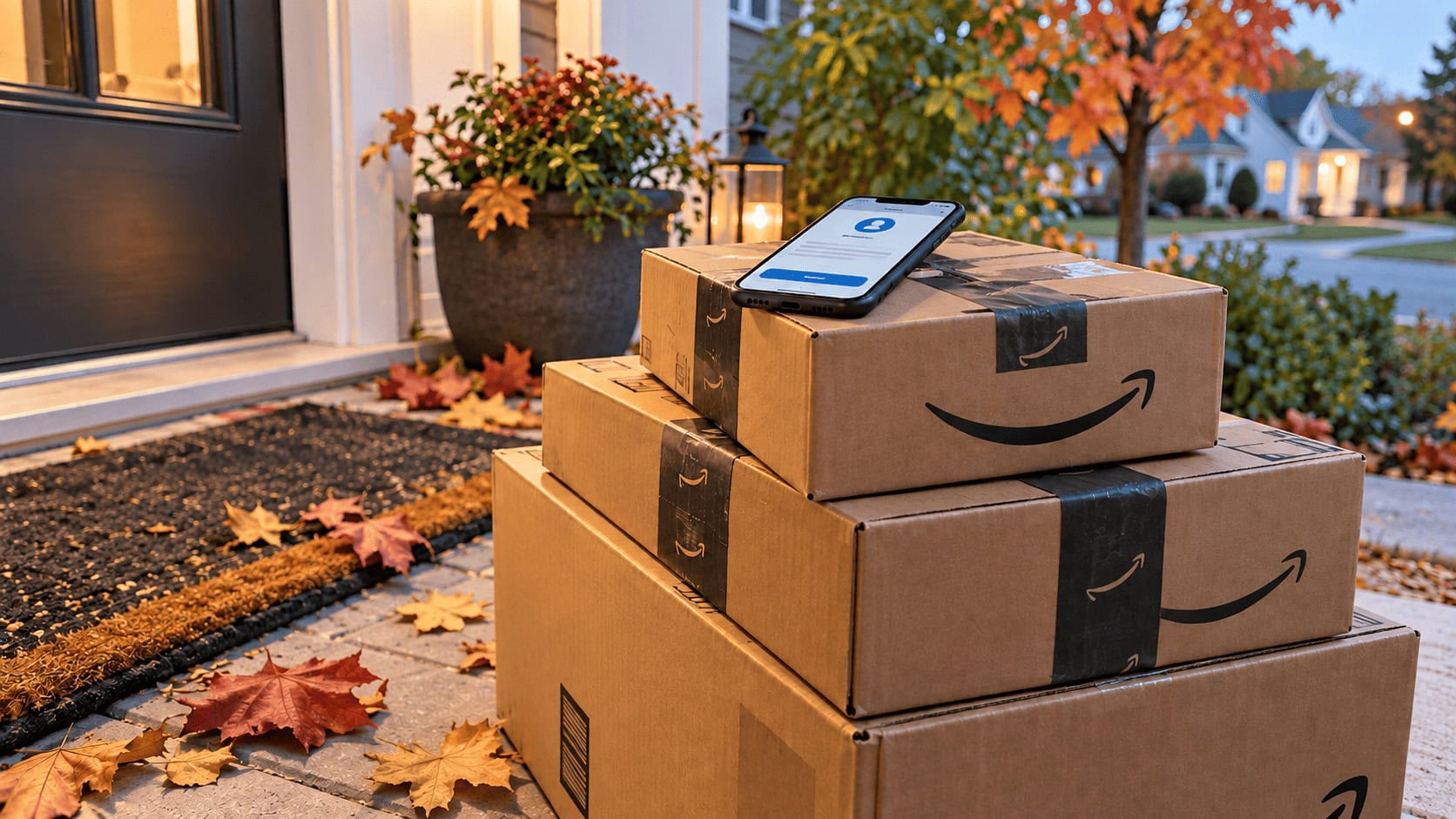
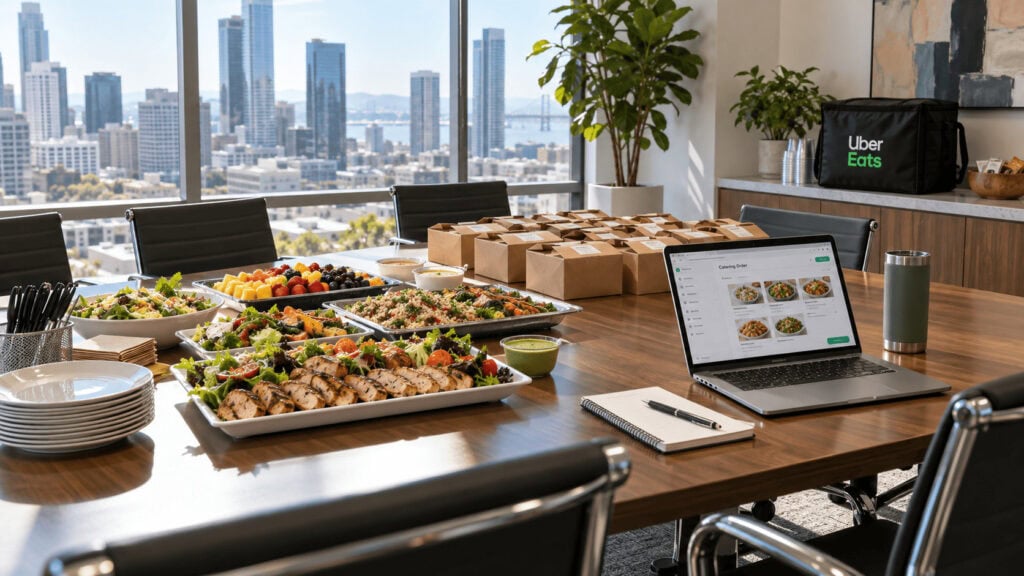
Somewhere in an office park this Thursday, an executive assistant is ordering a taco bar for 30 people. The company card covers the $420. The assistant’s personal ezCater account collects the points, and a few times a year those points turn into Amazon gift cards.
That person is the customer Uber just paid $2.3 billion to reach.
What Happened
Uber announced the all-cash deal on Tuesday, 6 October, alongside ezCater CEO Nihad Rahman, who ran the company’s finances from 2022 and took the top job in May 2025. The deal is expected to close in the coming months, subject to regulatory approval. Evercore advised ezCater, with Davis Polk as legal counsel, and J.P. Morgan advised Uber.
The Wall Street Journal framed it as Uber broadening its food delivery footprint, the latest step after its $14.8 billion bid for Delivery Hero in July. Dara Khosrowshahi gave the reason in one line: “Catering is a big business, and can be a huge revenue stream for restaurants.”
The numbers Uber disclosed about the target:
- Gross bookings: more than $2.5 billion over the trailing twelve months, growing in the high teens
- Average order value: above $400
- Restaurant network: more than 140,000 US restaurants
- Profitability: positive on non-GAAP operating income, and expected to be margin accretive for Uber
The plan is to plug ezCater into both Uber Eats and Uber for Business, the corporate account product that more than 300,000 companies already use to pay for employee rides and meals. Rosenblatt analyst Scott Devitt told Reuters that Uber’s business-focused bookings grew more than 40% in the second quarter, and that bringing workplace buyers in feeds the “membership flywheel.”
Investors shrugged. Uber stock closed at $69.48 the day before the announcement and finished Tuesday up 0.4%.
The Backstory
ezCater started in 2007, when Stefania Mallett and Briscoe Rodgers noticed how much a catered lunch helped sales reps win time with busy clients, starting with doctors’ offices. The founding insight was never about food. It was about a person ordering on behalf of someone else, for a business reason, with a business budget.
The venture path tracks a classic 2010s unicorn:
- 2018: a $100 million Series D, at a valuation reported around $700 million
- April 2019: a $150 million Series D-1 co-led by Lightspeed and GIC at $1.25 billion. ezCater then counted about 60,000 restaurants and said 97% of the Fortune 500 ordered through it. Mallett told Inc. the company could be ready to consider an IPO by 2021.
- December 2021: a $100 million Series D-2 extension led by SoftBank Vision Fund 2, at a reported $1.6 billion
Then came the part nobody planned. Offices emptied in 2020, and a business built on conference room lunches had to wait for the conference rooms to refill.
Run the arithmetic on the exit. Uber’s $2.3 billion is 1.44 times the $1.6 billion mark from December 2021. Over the 4.8 years between that round and this deal, that works out to roughly 7.8% a year, before any liquidation preferences reshuffle who gets what. Against the roughly $430 million ezCater raised in total, the price is a bit over five times capital in. A fine outcome for the early backers. A bond-like one for the last check.
Uber, for its part, has been here before. It bought Boston-area alcohol delivery company Drizly for about $1.1 billion in 2021 and shut the brand down three years later.
The Plan
Uber’s pitch has three parts, and only one is about logistics.
Bigger baskets. Khosrowshahi told investors on the second-quarter call that Uber is moving beyond single meal deliveries into large group orders and in-store pickup. ezCater delivers that overnight. Uber’s second quarter carried $58.0 billion of gross bookings across 3.87 billion trips, or about $15 per trip. One ezCater order is worth roughly 27 average Uber trips.
Corporate accounts Uber already holds. Uber for Business sells to travel managers, finance teams and procurement departments. Catering is one more line item for the same buyer, on the same invoice.
A head start on DoorDash. DoorDash for Business launched tray-style catering and a group Meal Manager on 30 April 2026, but only in San Francisco and New York. DoorDash said team-sized orders were up 30% year over year as more people worked in person. Uber just bought a national catering network instead of building one city at a time.
The scale is worth seeing clearly. At $2.5 billion of bookings and an average above $400, ezCater handles at most about 6.25 million orders a year, roughly 17,000 a working day. Against Uber’s annualized 15.5 billion trips, that is about one order in every 2,500. Against Uber’s $193 billion of 2025 bookings, it is about 1.3% of the dollars. Uber is buying a sliver of transactions with an outsized share of value per transaction.

The Business Model Angle
The chart is the question. Why would Uber pay 92 cents per booking dollar for catering when it offered 28 cents for Delivery Hero, which owns Glovo, Talabat, Foodpanda and PedidosYa across dozens of markets? Some of the gap is growth and margin. Most of it is structure. ezCater flips three things that make consumer delivery a hard business.
1. The courier barely matters. A delivery costs roughly the same labor whether the bag holds a $15 burrito or a $420 catering spread. On consumer apps, that fixed cost eats a big slice of every small order. Deliveroo’s average order in 2024 was £25.10. An ezCater order is more than twelve times that. On top of that, many ezCater restaurants run their own delivery and set their own delivery fee, with ezCater’s dispatch service available when they do not. The platform earns a marketplace fee without carrying the courier on every order. That is how a $2.5 billion booking business can be profitable while consumer delivery fights over cents.
2. The fee stack survives because the payer is not price shopping. ezCater’s published restaurant terms charge a 15% commission on the meal subtotal and delivery fee, plus a 2.99% payment transaction fee. On a $400 meal, that is about $72 before anything optional. Restaurants can then opt into a Preferred Partner fee of 2% to 20% for better search placement, pay-per-order Sponsored Listings, and a rewards multiplier. That is the quiet ratchet described in our take rate breakdown: the headline commission stays put while optional-but-useful programs lift the effective rate. It works best when the person comparing prices is not the person whose money it is.
3. The platform pays the chooser. This is the part Uber actually bought. ezCater’s loyalty program, ezRewards, gives the person who places the order points worth 1% to 5% of the food bill, redeemable for Amazon gift cards or order discounts. Restaurants can pay to boost the multiplier on their own listings, and ezCater badges those listings in search results so the orderer can see which ones earn more. On a $400 order at the top rate, that is $20 landing in an individual’s account, funded inside a bill their employer pays.
ezCater markets this openly. One customer quoted on its own blog said she cashes out about $800 a year in Amazon gift cards. Depending on the rate, that implies somewhere between $16,000 and $80,000 of food ordered through her account in a year.
Airlines figured this out decades ago with frequent flyer miles on business travel: the traveler keeps the miles, the employer pays the fare, and loyalty attaches to the person who books. ezCater built the catering version. Uber’s own loyalty engine, Uber One, works the opposite way, rewarding the person who eats and pays; Uber One members already account for more than 70% of its delivery bookings. Combining the two puts both kinds of loyalty inside one company.
For founders and investors, three takeaways:
- Basket size beats frequency when the last mile is fixed cost. A rare $400 order can be worth more than a frequent $15 one, because delivery cost does not scale with the bill.
- B2B marketplaces can win on the agent, not the principal. Rewarding the person who chooses, rather than the company that pays, is a real distribution moat. It is also a fragile one, since procurement can switch it off.
- Consolidators pay for structure, not volume. Uber is paying up for a category where pricing power comes from who sits on each side of the transaction, and paying down for scale in consumer delivery.
The Risk
The weakest point in this reading is the same loyalty mechanic it depends on. Employers are not blind to it.
ezCater’s own rewards terms now say that points earned through an ezCater Enterprise account stay with the employer, which keeps final authority over them. The University of Mississippi’s procurement FAQ for ezCater describes order rewards only as discounts on future ezCater orders. In other words, the larger and more organized the buyer, the more likely the personal kickback has already been redirected back to the company. The biggest accounts, the ones Uber for Business is best placed to sell, are exactly where the agent incentive is weakest.
The second risk is the office itself. Kastle Systems’ badge data put US office occupancy at 54.7% of its early-2020 baseline in the week of 22 September 2026, with a Tuesday peak of 65.3%. On Tuesday, 1 September, the reading was 62.6%, against 34.0% the Friday before. Catering is a mid-week business tied to how many people are in the room. Uber is buying a company whose demand curve follows return-to-office policy, which it does not control.
The strongest counterargument is that rewards are a side show. ezCater’s core promise is reliability: on-time delivery, 24/7 human support, and food that shows up as ordered before an important meeting. For the person placing the order, a late lunch in front of the CEO is a career problem, and avoiding it is worth more than a 1% gift card. If that is the moat, it transfers to Uber only as long as Uber keeps ezCater’s service layer intact rather than folding it into a consumer app built for speed and volume. The Drizly precedent is the warning: Uber has bought a specialist before and absorbed it until the brand disappeared.
Then there is regulation. The deal still needs approval, and Uber is already carrying a long antitrust review for Delivery Hero alongside a growing European labor bill, as covered in our piece on the €825 million Dutch fine. ezCater is a US-only, single-category asset, so the competition review should be lighter, but integration attention is finite.
Quick Questions
Is 92 cents per booking dollar a fair comparison with Delivery Hero? It is a rough one. All three figures divide the headline deal value by the latest annual gross bookings, without adjusting for debt, cash, growth or margin. Delivery Hero’s $14.8 billion equity value covers about $53 billion of 2025 bookings, including 14 markets it agreed to sell to SSW Partners for about $1.6 billion. Excluding those, the figure rises to roughly 31 cents, still about a third of the ezCater price.
Does ezCater deliver the food itself? Often not. Many restaurants on the platform run their own delivery and set their own delivery fee. ezCater can dispatch a driver when a restaurant does not deliver.
Who funds the ezRewards points? Every marketplace order earns at least 1% back, and restaurants can pay to raise the multiplier on their own listings, up to 5%. The points go to the account that placed the order unless an enterprise agreement assigns them to the employer.
Does DoorDash compete here? Yes. DoorDash has offered corporate meals since 2020 and launched dedicated workplace catering in San Francisco and New York in April 2026. It has the bigger US consumer delivery share, as our DoorDash business model breakdown covers, but a much smaller catering footprint than ezCater.
When does the deal close? Uber said in the coming months, pending regulatory approval and customary conditions.
The Business Model Analyst Take
Every headline called this a food delivery deal. It is closer to a payments deal with lunch attached.
Consumer delivery is a business where the person eating, choosing and paying is the same person, and that person checks the fees. Workplace catering splits those roles. The company pays, a single employee chooses, and the platform rewards the chooser directly. Put a $400 basket on top of that split and the economics flip: the courier becomes a rounding error, optional restaurant fees stick, and loyalty attaches to an individual’s Amazon balance rather than to price.
That explains why Uber paid three times more per booking dollar here than for Delivery Hero. The risk is that the same split is visible to anyone in procurement, and the largest customers are already closing it. Uber is betting that the Uber business model can sell catering to the finance department without losing the person who actually clicks Order.