
The ratio Prada is proud of counts every euro a top client spends. The only euros that matter are the ones the snorkeling trip caused.
What is Prada doing? Flying its best customers to Milan Fashion Week, French Polynesia and a private floor above its 1913 store, and selling them $20,000 crocodile bags and archive skirts that cost up to $100,000.
Does it pay? Chief executive Andrea Guerra says top clients spend about €7 with Prada for every euro spent entertaining them. Rivals claim up to 10 to one.
What does that number miss? It measures what a hand-picked customer spends, not what the entertaining changed. At Prada’s 78.3% gross margin, the program only breaks even if about 18% of that spending would not have happened without it.
Why chase these shoppers at all? Because they are the market. By Bain’s numbers, roughly 7 million people produced about 93% of luxury’s growth between 2019 and 2024.
Prada flew more than 100 of its best customers to Milan last week. They got private access to Leonardo da Vinci’s “Last Supper,” restaurants booked out just for them, and first dibs on a revived 1920s crocodile handbag with an onyx clasp at a little over $20,000.
It is a lovely story about hospitality. It comes with a lovely number: €7 of revenue for every €1 of entertaining.
That number is doing more work than it can carry. A ratio of spend to cost, calculated on customers you chose because they already spend the most, is not a return on investment. It is a description of who got invited. The real question is how much of that €7 the trip created, and the answer decides whether Prada’s upmarket push is a growth engine or a very expensive thank-you card.
What Happened
Nick Kostov reported in The Wall Street Journal on September 27 that Prada is building out a program for what it calls VICs, very important clients, and that it shuttled more of them to this season’s womenswear show than it did in February.
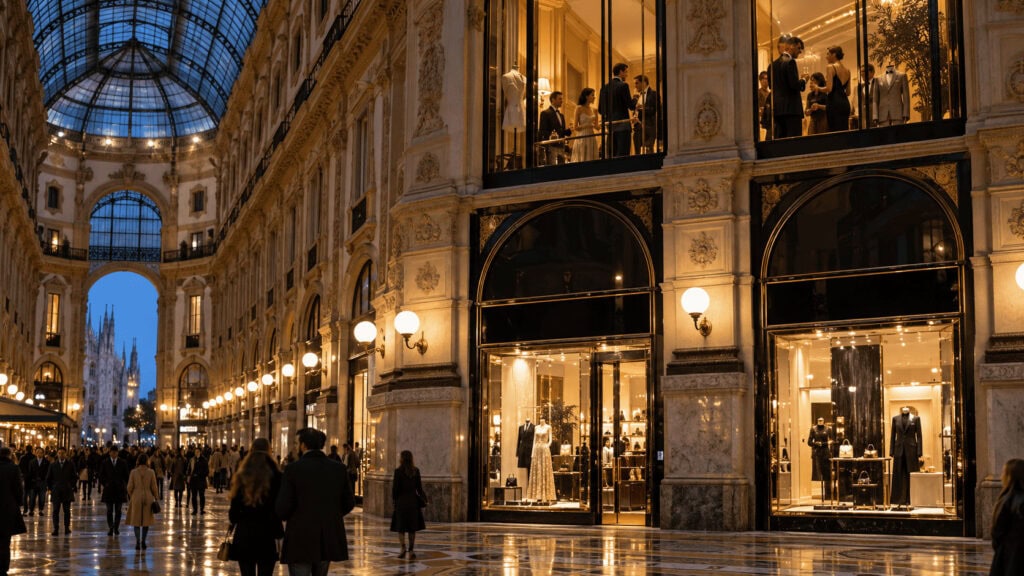
The menu is broad. A renovated eight-floor complex in Milan’s Galleria Vittorio Emanuele II, with public shop and exhibition space downstairs and a private club upstairs offering re-editions of 1988 runway looks, on-site tailoring and jewelry found nowhere else. A grooming room stocked with Prada beauty. Custom versions of archive skirts cut to a client’s measurements. A week in French Polynesia in February, snorkeling and helping tend coral. Some Prada executives joke that the company is turning into a tour operator for the wealthy.
The Galleria concept, which Guerra calls the “epicenter of epicenters,” is being replicated in 25 of the world’s biggest luxury capitals.
Then the metric. Guerra told the Journal that Prada’s top customers spend about €7 with the brand for every euro it spends entertaining them. Executives at rival groups say the figure can reach 10 to one. Louis Vuitton, Dior and Chanel have been running this playbook for years, and Prada is openly catching up.
The Backstory
The strategy makes sense the moment you look at where luxury’s growth actually went.
Bain puts top clients, a little over 2% of luxury shoppers, at 45% of global purchases in 2024, up from 35% in 2021. Their spending nearly doubled, from €88 billion in 2019 to €165 billion in 2024. Meanwhile Bain counts about 350 million luxury shoppers in 2024, roughly 50 million fewer than at the 2022 peak, and its later update puts the figure near 340 million for 2025.
Put those numbers next to the size of the whole market and something falls out that the Journal did not print. Bain-Altagamma sized personal luxury goods at €281 billion in 2019 and €364 billion in 2024. That is €83 billion of growth. The top clients added €77 billion of it.

Everyone else, roughly 343 million people, added about €6 billion, from about €193 billion to about €199 billion. That is 3.1% in five nominal years, or around 0.6% a year, which almost certainly means fewer items bought, given the price increases that pushed many of them out in the first place.
Per head the gap is even starker. €165 billion across roughly 7 million top clients is about €23,600 each. The remaining €199 billion across 343 million people is about €580 each. One group spends about 40 times more per person than the other, and it is the only group that grew.
So Prada is not choosing to chase the rich out of vanity. For five years, the rich were most of the market’s growth.
The Plan
Guerra’s version, since he arrived in 2023, has three moving parts.
Stretch the icon upward. The Galleria handbag got precious-material versions and a campaign with artist Alex Da Corte starring Scarlett Johansson. Some versions now run above $7,500. The idea, borrowed from Louis Vuitton’s Capucines launch in 2013, is to use a bag everyone knows to establish a higher price point without abandoning the people who buy the standard version.
Build a room above the store. The Milan complex is part shop, part museum, part club, and it will exist in 25 cities. The expensive floor is the private one. The cafe downstairs is open to anyone.
Keep a door open at the bottom. In March, Prada launched a five-piece recycled-material capsule priced below comparable main-line products. And the nylon bag, the 1980s breakthrough that made Prada a global fashion name, remains the cheapest way into the house.
The financial backdrop is decent but not dazzling. Prada Group posted first-half 2026 net revenue of €3,048 million, up 16% at constant currency with Versace included and 5% organically, its 22nd straight quarter of organic growth. The Prada brand grew retail sales 3.3% to about €1.62 billion, accelerating to 6.3% in the second quarter on full-price, like-for-like sales. Miu Miu grew 2.5% against a year in which it had grown 40% or more.
Advertising and communication rose to 10.1% of sales in the half, from 9.3%. On €3,048 million of revenue that is roughly €308 million in six months. Management says full-year marketing intensity will be in line with last year or slightly above, and that organic operating margin held flat at 22.6% because savings elsewhere paid for it.
Read that plainly: the VIC program is being funded by cuts in corporate, retail and industrial costs, and it has to earn its keep in a brand whose core retail line is growing low single digits.
The Business Model Angle
A ratio on selected customers is a report card, not a return. Prada invites the people who already spend the most. Their €7 would be large with or without a dinner at the “Last Supper.” The number that matters is incremental revenue, and it has an exact break-even. At the group’s 78.3% first-half gross margin, every €1 of entertaining needs about €1.28 of new sales to pay for itself. Divide by €7 and you get roughly 18%. If less than about one euro in five of what a VIC spends was caused by the program, the snorkeling trip loses money, however good the ratio looks on a slide. At the rivals’ 10 to one, the hurdle drops to about 13%. That is the real gap between Prada and Chanel: not five years of practice, but a lower bar to clear.
Hospitality is a fixed cost wearing a variable cost’s clothes. A Milan weekend for 100 people, an eight-floor complex and 25 more like it are commitments, not campaigns. They get booked as marketing, occupancy and staff, which makes them easy to start and hard to judge. We made a similar argument about Aritzia’s style advisers, a marketing asset that lands in store payroll. Prada’s version lands in a hotel bill.
The best-performing asset in the program is the one that costs nothing to run. An archive of thousands of past looks, re-editioned on request, turns sunk design cost into a $100,000 skirt. That is the most defensible part of the whole plan because no rival can copy Prada’s 1988 runway. The tour operator part, by contrast, is replicable by anyone with a travel desk, which is exactly why rivals already do it.
The Risk
The case against this reading is real, and the strongest version of it is uncomfortable for the skeptic.
Retention is incremental too. The 18% hurdle assumes the entertaining has to create new spending. But a VIC who drifts to Dior takes €23,600 a year out the door, and Bain’s own data says top clients now feel less special than they used to. If the trip simply keeps a client from defecting, the incremental revenue is the whole €7, not a slice of it. That is the honest counterargument, and it is probably why every major house runs these programs. The catch is that it is almost impossible to measure, which is also why nobody publishes a number that separates keeping from growing.
The ratio may already be conservative. Guerra may be counting only direct spending by attendees in a defined window. Word of mouth among wealthy peers, the halo from a room in Milan, and new top clients recruited through events would not show up in that figure. “Our job is also to create new top spenders,” he said, and that part of the return lands outside the ratio entirely.
The top can stall too. Bain found that top-client spending plateaued in 2025, and its partner Federica Levato described those shoppers as feeling betrayed by price increases that outran creativity. If the one segment that carried the market for five years has stopped growing, a program built to capture it is chasing a flat line with an escalating cost base.
Too expensive is a live risk. Bernstein’s Luca Solca told the Journal that the risk of Prada ending up too expensive is material, even with nylon to offset it. LVMH shares are down about 38% this year and Prada’s about 15%, according to the Journal. The same price increases that built the VIC tier are what sent the entry-level shopper toward vintage and resale.
Quick Questions
What is a VIC at Prada? “Very important client,” Prada’s term for its top spenders. They get private shopping spaces, first access to exclusive products, and invitations to events and trips.
How much do Prada’s top clients spend per euro of entertaining? About €7, according to CEO Andrea Guerra. Executives at rival groups say their figure can reach 10 to one.
How concentrated is luxury spending? Bain says just over 2% of luxury shoppers made 45% of purchases in 2024, spending €165 billion, up from €88 billion in 2019.
How many people buy luxury goods? About 350 million in 2024 by Bain’s count, roughly 50 million fewer than at the 2022 peak, and close to 340 million in 2025.
Is Prada still growing? Yes. First-half 2026 revenue rose 16% at constant currency including Versace and 5% organically. The Prada brand accelerated to 6.3% retail growth in the second quarter.
Where does Prada stand strategically? Our Prada SWOT analysis covers the brand’s positioning, and the LVMH SWOT covers the rival that set the pace at the top of the market.
The Business Model Analyst Take
Prada is making the right bet about where the money is. Five years of Bain data say the top 2% of shoppers carried nearly all of luxury’s growth, and a house that ignores them is ignoring the market.
The problem is the scoreboard. A €7-to-€1 ratio on invited guests will look good whether the program works or not, because it is built on people who were going to spend heavily anyway. Hermès and Chanel can afford to run on that kind of faith because their product does the heavy lifting. Prada, still converting a nylon reputation into a couture one, needs to know which part of its revenue the trips actually created.
Founders running any VIP tier, from enterprise SaaS to a restaurant group, can steal the test without owning a single crocodile bag. Take your ratio, divide one by your gross margin, then divide by the ratio. That percentage is how much of your best customers’ spending your perks have to cause. If you cannot name a number that clears it, you are not running a growth program. You are running a very generous loyalty tax on people who already loved you.
Sometimes that is still worth paying. It is just worth knowing which one you bought.